Source recyclable plastic tube with lid for food packaging
Find 30 options for a recyclable plastic tube with lid for food, cosmetics, and medicine applications. Buyers can compare capacities, certifications, and customization features from verified suppliers in China.
Key considerations
Products List


![Round Food Containers Plastic Clear Storage Tubs with Lids [All Sizes]](https://image.made-in-china.com/221f0j00tqIfSzQKhwko/Round-Food-Containers-Plastic-Clear-Storage-Tubs-with-Lids-All-Sizes-.webp)




Comprehensive Sourcing Guide
Strategic Sourcing Guide for Recyclable Plastic Tubes with Lids for Food Applications
Understanding the Product Category and Material Composition
When sourcing recyclable plastic tubes with lids for food applications, buyers must first establish a clear understanding of the material science and structural characteristics that define this category. The core product is identified as a plastic tube, often referred to in industry contexts as a "plastic can" or "packaging tube," designed specifically for the containment of semi-solid or liquid food products. The primary material observed in high-volume supply chains for this application is Polyethylene Terephthalate (PET). This material is selected for its clarity, strength, and, crucially, its recyclability profile, which aligns with modern sustainability mandates in the food and beverage sector.
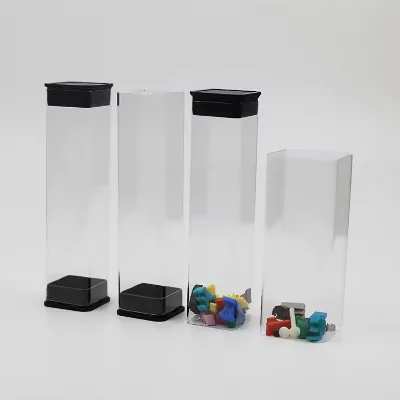
The physical form of these tubes is typically square or cylindrical, with the square bottle variant offering specific advantages in shelf stability and palletization efficiency. The tubes are characterized by a screw cap sealing mechanism, which ensures an airtight environment necessary for preserving food quality and preventing leakage during transit. The body material is consistently noted as PET, a thermoplastic polymer that offers excellent barrier properties against moisture and oxygen. The color options for these containers are highly flexible, ranging from clear or transparent finishes to any custom color requested by the buyer, allowing for significant brand differentiation. The surface treatment often involves screen printing or flexographic printing, enabling the application of branding and nutritional information directly onto the tube surface.
Technical Specifications and Customization Capabilities
The technical specifications of recyclable plastic tubes with lids vary significantly based on the intended food application, ranging from small pharmaceutical-grade containers to larger household packaging units. Buyers should expect a wide spectrum of capacity options. Standardized volume offerings include sizes such as 0.5ml, 1.5ml, 2.0ml, 5.0ml, 7ml, and 10ml, which are common for condiments, spices, or sample portions. For broader food packaging needs, larger capacities are available, including 4oz, 6oz, 7oz, 8oz, 10oz, 12oz, 16oz, 20oz, 22oz, 24oz, 32oz, and up to 200000 units in bulk orders.
Dimensional customization is a critical feature of this product category. While some standard dimensions exist, such as 14512565mm for specific tube models, the industry standard often supports custom sizing to fit unique product formulations. The standard production models frequently cited include identifiers like "xy-2026060" or "JD-KP," which serve as reference points for manufacturers. The tubes are designed with matching lids, available in both flat and dome configurations, to ensure a secure fit and optimal sealing performance. The production process allows for customization of the tube shape, color, and printing details, with printing capabilities supporting 1 to 9 colors depending on the complexity of the design.
Compliance, Certification, and Safety Standards
For food packaging, regulatory compliance is non-negotiable. Buyers must verify that the recyclable plastic tubes with lids meet the stringent safety standards required for direct or indirect food contact. The supply chain data indicates that reputable manufacturers often hold certifications such as FDA (Food and Drug Administration) and LFGB (German Food and Feed Code), which are essential for accessing markets in North America and Europe respectively. Additionally, certifications like CE and ISO are frequently observed, indicating adherence to international quality management and safety protocols.
Beyond general certifications, specific testing and verification are required to ensure the material does not leach harmful substances into food products. Third-party testing bodies such as SGS and BV are commonly engaged to validate the safety and quality of the plastic tubes. The presence of FSC (Forest Stewardship Council) certification may also be relevant if the packaging involves paper-based components or if the supply chain emphasizes sustainable sourcing practices. Buyers should explicitly request test reports confirming that the PET material and the associated lids are free from BPA and other prohibited substances, ensuring the product is safe for hot and cold food applications, including tea cups, jelly cups, and general food packaging.
Cost Drivers and Minimum Order Quantities
The economics of sourcing recyclable plastic tubes with lids are influenced by several key variables, including material costs, customization complexity, and order volume. The Minimum Order Quantity (MOQ) is a significant factor in the total cost of ownership. Market observations suggest an MOQ range starting from 500 units up to 200,000 units, with a common baseline of 1,000 pieces for standard configurations. Higher customization levels, such as specific color matching or complex multi-color printing, may push the required order volume higher to amortize the setup costs.
Pricing for these products is highly variable, with observed ranges spanning from $0 to $3.30 per unit depending on the specific model, capacity, and order size. The cost structure is further impacted by the packaging method; tubes are typically packed in export cartons or on pallets, with standard carton configurations holding 200 pieces. Lead times are another critical cost driver, with production times typically ranging from 15 to 20 days, followed by a delivery window of 7 to 15 days. Buyers should factor in the time required for sample approval, which usually takes 5 to 7 days, into their overall project timeline. While stock samples may be available at no charge, the production lead time must be accounted for in supply chain planning to avoid stockouts.
Typical Applications and Usage Scenarios
The versatility of recyclable plastic tubes with lids makes them suitable for a diverse array of applications within the food and beverage industry. These containers are designed to handle both hot and cold products, making them ideal for a wide range of consumables. Common usage scenarios include packaging for cosmetics, personal care products, food items, beverages, chemicals, and medicines. Specific applications identified in the market include hot cups, cold cups, tea cups, drinking cups, and jelly cups.
The tubes are particularly effective for universal packaging needs, serving as a primary container for pharmaceutical packaging, gift packaging, and general food packaging. The clear or transparent nature of the PET material allows consumers to view the product inside, which is a significant advantage for food items where visual appeal is a purchasing driver. The screw cap design ensures that the contents remain fresh, making these tubes suitable for products that require long shelf lives. Whether for household use, medical applications, or commercial food service, the adaptability of the tube design allows for seamless integration into various product lines.
Supplier Evaluation and Quality Control Protocols
Selecting the right supplier for recyclable plastic tubes requires a rigorous evaluation process focused on technical capability, reliability, and quality assurance. Buyers should prioritize suppliers who demonstrate a clear track record in producing PET-based packaging with the necessary certifications. The origin of the products is predominantly China, with specific manufacturing hubs noted in Shenzhen. When evaluating potential partners, buyers must verify the supplier's ability to meet the specific customization requirements, such as the availability of free stock samples and the ability to produce custom colors and shapes.
Quality control should be an integral part of the procurement strategy. Buyers must ensure that the supplier adheres to strict production standards, such as the 350ml, 500ml, and 650ml standards mentioned in industry specifications, or custom equivalents. The production process should include checks for surface treatment quality, ensuring that screen printing and flexographic printing are crisp and durable. Verification of the "recyclable" claim is essential; buyers should confirm that the tubes are indeed made from recyclable materials and that the supplier provides documentation supporting this claim. The "Unrecycled" status of some raw materials should be clarified to ensure the final product meets the buyer's sustainability goals.
Long-Term Procurement Considerations and Sustainability
Sourcing recyclable plastic tubes with lids is not merely a transactional activity but a strategic decision with long-term implications for brand reputation and supply chain resilience. The trend toward sustainability in the food industry demands that packaging solutions be not only functional but also environmentally responsible. The recyclability of PET tubes is a key selling point, but buyers must look beyond the material itself to the entire lifecycle of the product. This includes the efficiency of the production process, the waste generated during manufacturing, and the end-of-life options for the packaging.
Buyers should consider the scalability of their supply chain. With production times of 15-20 days and delivery times of 7-15 days, the ability to ramp up production quickly in response to market demand is crucial. The availability of custom capacities and sizes allows for future product line expansions without the need to change packaging suppliers. Furthermore, the flexibility in printing and color options supports brand evolution and marketing campaigns. By establishing a partnership with a supplier who offers robust quality control, comprehensive certifications, and a commitment to sustainability, buyers can ensure a steady supply of high-quality, recyclable plastic tubes that meet the evolving needs of the food industry. The ability to customize the tube design, from the lid type to the printing colors, ensures that the packaging remains a competitive advantage in a crowded marketplace.
FAQs
What certifications do recyclable plastic tubes with lid for food have?
These tubes typically hold FDA, LFGB, CE, ISO, and BV certifications. Buyers should verify specific test reports from SGS or BV to ensure the PET material meets safety standards for direct food contact and does not leach harmful substances.
Can I customize the capacity and dimensions of the plastic tubes?
Yes, customization is available for capacity and dimensions. Standard sizes include 350ml, 500ml, and 650ml, while custom options range from 0.5ml to 200000 units. Buyers can request specific dimensions like 145*125*65mm or other custom requirements.
How long is the production and delivery time for these tubes?
Production time ranges from 15 to 20 days, followed by a delivery window of 7 to 15 days. Sample approval takes an additional 5 to 7 days. Buyers should plan their inventory accordingly to account for these lead times.
What is the minimum order quantity for recyclable plastic tubes?
The minimum order quantity typically starts at 1000 pieces but can range from 500 to 200000 units depending on the supplier. Higher customization levels may require larger volumes to amortize setup costs for printing and molding.
Which printing options are available for the tube surface treatment?
Surface treatments include screen printing and flexographic printing with 1 to 9 colors available. Buyers can choose from clear, transparent, or custom colors. The printing allows for branding and nutritional information directly on the PET tube surface.
What packaging methods are used for shipping these plastic tubes?
Tubes are packed in export cartons or on pallets. Standard carton configurations hold 200 pieces per box. This packaging ensures stability during transit and protects the square or cylindrical bottles from damage before reaching the buyer.